
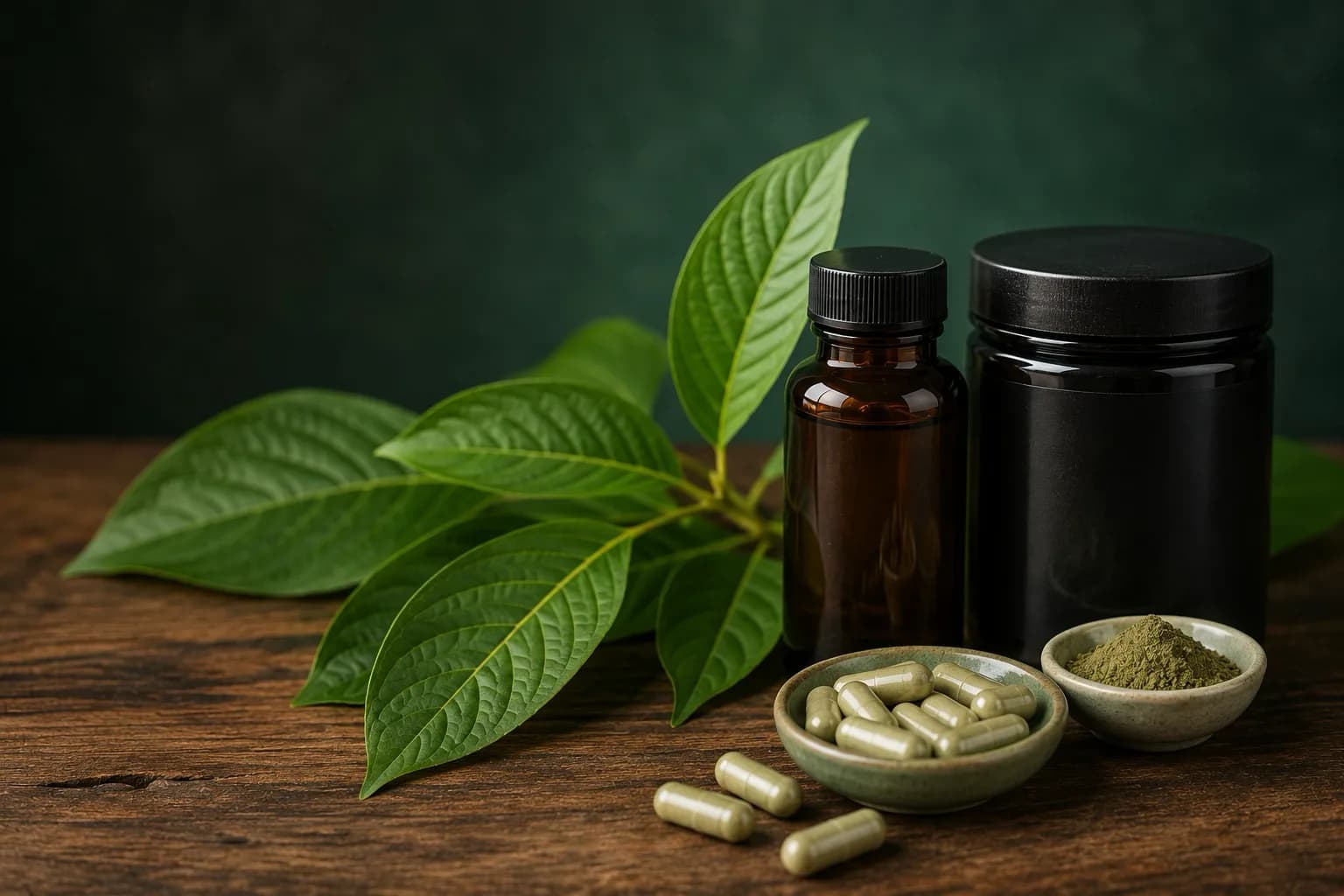
You've probably seen them by now — little tablets or shot bottles labeled “7-OH,” sitting near the register at a smoke shop or gas station. Maybe someone recommended one for pain, or you saw it advertised online as a natural way to relax. Either way, you're here because you want a straight answer: what is this stuff, and is it actually safe?
Here's the short version: 7-OH is not just “stronger kratom.” It's a concentrated compound that behaves a lot like a prescription opioid in the body, and that matters a great deal when it comes to safety, dependence, and withdrawal. Let's walk through what it is, why it's suddenly everywhere, and what to do if you or someone you care about is already struggling to put it down.
What Is 7-OH Kratom?
What Is 7-Hydroxymitragynine?
7-hydroxymitragynine — almost everyone just says “7-OH” — is a compound found naturally in the kratom plant, Mitragyna speciosa. Kratom leaf itself is mostly made up of a different compound, mitragynine, and only carries a tiny trace of 7-OH. Your own body even makes a bit of it too, since the liver converts some mitragynine into 7-OH after you've taken kratom.
So where's the problem? A lot of what's sold today isn't ground-up kratom leaf at all. It's extracted, purified, and concentrated 7-OH — a compound that occurs in trace amounts in nature, now packaged as the star ingredient. That's what you're looking at when a label says “7-OH tablets” or “7-OH shots.”
How Is 7-OH Different From Traditional Kratom?
Traditional kratom — the powder, the capsules, the tea — contains a broad mix of natural kratom alkaloids, with mitragynine as the main one. It tends to build gradually and, for most people, stays on the milder end.
7-OH products break from that in a few important ways. They're concentrated well beyond anything nature produces, so a single small tablet can pack far more 7-OH than a person would ever absorb from chewing raw leaf. They also act much more directly on the brain's opioid receptors — the same ones targeted by morphine and oxycodone — and with considerably more strength than mitragynine has. And the marketing around them tends to lean into pain relief and relaxation, often without much, if any, guidance on dosing.
Why Are 7-OH Products Becoming So Popular?
Part of it comes down to access. Kratom and its derivatives aren't regulated the way prescription medications are in most states, which is how 7-OH tablets and shots ended up on convenience store counters next to vapes and energy drinks. No prescription, sometimes no age check, and often no real explanation of what's actually in the bottle.
The other piece is marketing. 7-OH gets pitched online as a “natural” option for pain, stress, or even opioid withdrawal itself. That framing does a lot of work — it makes the product feel gentler than it is. But coming from a plant doesn't make something automatically safe. It's the concentration process that changes the picture entirely.
Is 7-OH Stronger Than Regular Kratom?
Yes, and by a wide margin. Researchers at Johns Hopkins and elsewhere have found that 7-OH binds to opioid receptors far more powerfully than mitragynine does — some estimates put its receptor affinity well above morphine's. Practically speaking, that means faster onset, a harder hit, and a real jump in the risk of dependence and overdose compared to what most people experience with kratom leaf or powder.
| Feature | Traditional Kratom (leaf/powder) | 7-OH Products (tablets/shots) |
|---|---|---|
| Main active compound | Mitragynine | Concentrated 7-hydroxymitragynine |
| Opioid receptor strength | Milder | Significantly stronger |
| Onset of effects | Gradual | Fast |
| Typical form | Powder, capsules, tea | Tablets, extracts, liquid shots |
| Risk of dependence | Present, but generally lower | Higher, given potency and speed |
| Regulation | Varies by state | Largely unregulated, under FDA/DEA review |
How Does 7-OH Affect the Brain and Body?
Once it's in your system, 7-OH latches onto mu-opioid receptors — the same receptors involved in pain relief, mood, and how your body handles stress. That's what produces the pain relief, relaxation, and mild euphoria some users describe, similar to what you'd feel on a low dose of an opioid painkiller.
The catch is what happens with repeat use. The brain starts leaning on the substance instead of its own chemistry to feel normal. It's the exact same adaptation that drives dependence on prescription opioids — which is really the whole point here. 7-OH isn't the harmless herbal product it's sometimes made out to be.
Can 7-OH Cause Addiction?
It can, and given how concentrated it is, it can happen faster than with traditional kratom. That doesn't mean everyone who tries it ends up addicted — plenty of people don't. But the risk is real, and it climbs the more regularly someone uses it. The pattern looks a lot like what we see with opioid addiction:
- Tolerance tends to show up first. The same dose stops doing what it used to, so people take more, or take it more often, chasing the original effect.
- Dependence follows when the brain adjusts to having 7-OH around consistently and starts to need it just to feel okay. This is different from simply liking the effect — it's a physical shift, and it's what makes stopping suddenly so hard on the body.
- Cravings are often the clearest sign something has changed. A strong pull to use again, even when someone genuinely wants to stop, usually points to the brain's reward system having been affected. Stress, routine — reaching for a tablet at the same time each day — or just running low on supply can all set them off.
Common Side Effects of 7-OH
Even without addiction in the picture, people report a range of 7-OH side effects: nausea, dizziness, drowsiness, constipation, sweating, dry mouth, headaches. At higher doses, breathing can slow down — a form of respiratory depression, which is one of the more serious concerns.
One thing that makes all of this harder to predict is that 7-OH products aren't standardized the way medications are. The actual strength can vary quite a bit from one brand to the next, so what feels manageable from one tablet might not be from another.
7-OH Withdrawal Symptoms
If someone who's been using 7-OH regularly stops, or cuts back suddenly, the body needs time to readjust — and that adjustment isn't comfortable. Common 7-OH withdrawal symptoms include muscle aches, joint pain, anxiety, irritability, trouble sleeping, sweating, chills, nausea, and strong cravings.
7-OH Withdrawal Timeline
It looks a little different for everyone, but there's a general pattern:
- First 12–24 hours Restlessness, anxiety, and cravings tend to set in.
- Days 1–3 Usually the hardest stretch, with muscle aches, sweating, and nausea at their peak.
- Days 4–7 The physical symptoms start easing off, though fatigue and low mood can stick around a bit longer.
- Weeks after Some people notice lighter, lingering effects — mood swings, disrupted sleep — as the brain keeps recovering.
This is part of why a medical detox program is usually the better route rather than trying to quit cold turkey alone. A medical team can keep symptoms manageable and step in quickly if anything more serious comes up.
Who Is Most at Risk?
Risk isn't evenly spread. It tends to be higher for people using 7-OH daily or multiple times a day, for those who started using it to self-manage chronic pain without medical input, and for anyone with a prior history of opioid addiction or other substance use. Mixing 7-OH with alcohol or other sedatives raises the danger considerably, since both can slow breathing. Buying from unregulated sources — where nobody really knows the strength of what's in the bottle — adds another layer of risk on top.
None of this means someone did something wrong by trying 7-OH. Most people who end up here didn't fully realize how potent it was when they started.
When Should You Seek Professional Help?
It's not always obvious where the line is between casual use and something more serious. A few signs worth paying attention to:
- Needing more to get the same effect
- Feeling sick or anxious when you go too long without it
- Finding it harder than expected to cut back or stop
- Spending more time or money on it than you'd like to admit
- Noticing it's starting to affect your work, relationships, or health
If any of that sounds familiar, you don't have to wait for things to get worse before reaching out. Getting support early usually makes the whole process easier.
Treatment Options for 7-OH Addiction
The reassuring part is that 7-OH addiction responds well to treatment, and there's support available at every stage of recovery.
Medical Detox
Supervised detox is typically the safest place to start, since withdrawal from opioid-like substances can be physically rough and, at times, genuinely risky. A supervised setting means a clinical team is watching vital signs, managing symptoms, and helping the body clear the substance as safely as possible.
Residential Treatment
Detox on its own usually isn't the whole answer. Addiction treatment programs with structured residential care give people real distance from daily triggers, along with round-the-clock support, to focus on healing.
And because addiction rarely comes from just one place, therapy plays a big role in what comes after. It helps people work through whatever led them to lean on a substance in the first place — untreated pain, stress, anxiety, or a co-occurring mental health condition — and build better ways of coping. Long-term recovery tends to combine individual counseling, group support, and a plan for staying steady once inpatient rehab ends.
If cost is a worry, most programs can verify your insurance quickly and confidentially before you commit to anything — and PPO insurance coverage often pays for most or all of detox and residential treatment.
Frequently Asked Questions
Is 7-OH kratom legal?
It depends on where you live, and the rules are shifting fast. In 2025, the FDA recommended that concentrated 7-OH products be classified as a controlled substance, with a final DEA decision still pending. Some states and cities have already restricted or banned it outright; others still allow it to be sold freely.
Is 7-OH the same as regular kratom?
Not really. Kratom leaf is mostly mitragynine with just a trace of 7-OH. 7-OH products concentrate that trace compound into the main ingredient, making them far more potent and far closer to a prescription opioid in effect.
Can you overdose on 7-OH?
Yes. Because it activates opioid receptors so strongly, taking too much — especially combined with alcohol or other sedatives — can slow breathing to dangerous levels. Overdose deaths tied to concentrated 7-OH products have already been reported.
How long does 7-OH withdrawal last?
Physical symptoms usually peak in the first few days and start to fade within a week, though fatigue or mood changes can linger a bit longer for some people. A medical detox team can help make this process safer and more manageable.
Can I quit 7-OH on my own?
Some people do try, but withdrawal can be uncomfortable and, for regular or heavy users, genuinely risky. Working with a detox team or addiction treatment program makes the process considerably safer.
Final Thoughts
7-OH kratom products are easy to find, but that doesn't make them harmless. Because they're concentrated and act so directly on the brain's opioid receptors, regular use can lead down the same road as other opioids — tolerance, dependence, withdrawal. It's a road we know well from substances like fentanyl and prescription painkillers, and the way out is the same too.
If you've been using 7-OH and it's gotten hard to stop, or withdrawal feels like more than you can manage alone, you don't have to figure it out by yourself. Professional support makes the process safer and gives you real tools to move forward. Reaching out isn't a last resort — for a lot of people, it's the first step toward feeling like themselves again.
Help Is Available 24/7
If you or someone you know is struggling, free and confidential support is available around the clock.
988 Suicide and Crisis Lifeline: Call or text 988.
SAMHSA National Helpline: 1-800-662-HELP (4357).
Struggling to Put 7-OH Down?
Our medically supervised detox and residential programs are built around your safety and long-term recovery. Compassionate support is available 24 hours a day.
Disclaimer: The information provided in this article is for educational purposes only and is not intended as medical advice. Concentrated 7-hydroxymitragynine products act on the body's opioid receptors, and navigating withdrawal or addiction recovery carries real medical risks. Always consult a qualified healthcare professional or addiction specialist before starting a detox protocol. If you suspect an overdose, call 911 immediately.